Fire Australia 2026: five themes for compliance teams
1. BESS and lithium-ion is no longer hypothetical
Battery energy storage systems and lithium-ion fire risk dominated more sessions than any other single topic. The conversation has shifted in tone from "we need to plan for this" to "we are already responding to it." Industrial-scale BESS installations, EV charging in commercial car parks, and the slow normalisation of lithium-ion power tools and e-bikes inside buildings have all moved the goalposts on what fire systems are expected to suppress.
The practical implication for compliance teams: building risk profiles are changing faster than the standards. Owners need a maintenance regime that surfaces what is actually on site — and a service provider with a register that knows when a tenancy adds equipment that the building's existing fire systems were not designed for.
2. Performance-based building code is widening the compliance gap
The Performance Solution pathway in the National Construction Code is a powerful tool when used well. The Thursday plenary made the case that, used poorly, it produces buildings whose fire safety strategy lives in a designer's head and a sealed report — and which routine maintenance has no clear way to verify against.
The throughline: as buildings get more bespoke, the routine inspection record needs to carry more provenance. What standard was this measure approved against? What is the performance benchmark? What does "operating to standard" mean for this specific installation? Generic checklists do not answer those questions. Asset-aware records do.
3. Victorian ESM reforms signal a national direction
Victoria's Essential Safety Measures maintenance reforms came up repeatedly in corridor conversations as a signal of where the rest of the country is likely heading. The substance is straightforward: tighter requirements around who can perform maintenance, what records must be kept, and how the annual report attests to the actual performance of each measure rather than just the fact that work was scheduled.
If you operate in Victoria, you are already living this. If you operate elsewhere, treating it as a leading indicator for your own state is rational risk management. The technology and process choices that work in the Victorian regime are the choices that will hold up wherever you operate next.
4. Passive fire is back at the front of mind
Cladding has been the headline topic in passive fire for a decade. What we heard this year was the broader category — fire-rated walls, fire doors, dampers, penetration seals — receiving renewed regulatory attention. Passive measures are easy to under-inspect because they are static; until they fail, they look identical to the day they were installed.
The standards-side answer is rigorous documentation. Every penetration, every door, every damper carrying photographic evidence and a clear test record. The operational answer is software that lets a technician on site capture that evidence as routinely as they capture an active-system test reading. AS 1851 alignment for passive measures is one of the things compliance teams told us they want better tooling for.
5. Connections matter — systems integration over silos
The closing plenary was titled "Connections matter: building systems integration." The point landed because it cut across every other theme of the conference. BESS risk crosses electrical and fire. Performance-based code crosses design, construction, and operations. ESM reforms cross legal, contractor, and owner. Passive fire crosses building surveyors, designers, and routine maintenance.
Software that lives in its own silo — a generic field service tool here, a separate compliance spreadsheet there, an accounting system that does not know what got serviced — actively works against the connections the industry is trying to build. The whole purpose of a single connected data model is that the field, the office, compliance reporting, and accounting share one source of truth.
We were there
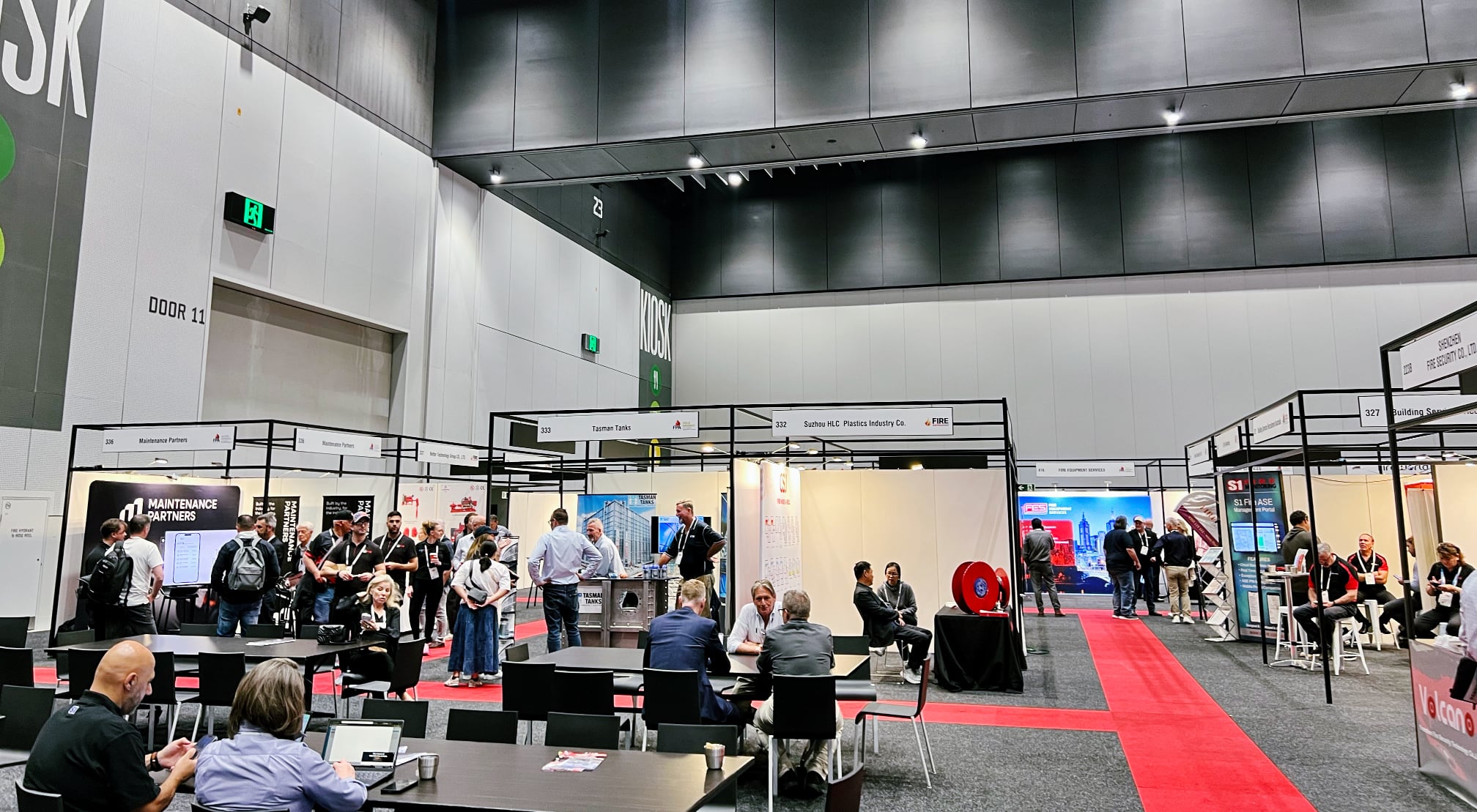
This was Maintenance Partners' first Fire Australia conference as an exhibitor. It was the right room. We met technicians from operations big and small, compliance directors who carry the AFSS lodgement burden, regulators thinking about where the framework goes next, and engineers wrestling with the same documentation problems we built the platform to solve.
If you stopped by the stand and want to keep the conversation going, the team is on this page. If you didn't make it to Melbourne and the themes above sound like the conversations happening inside your business, the same applies.
Looking ahead
Two takeaways for our roadmap that we are leaving Melbourne with. First, the BESS / lithium-ion thread changes the asset register conversation — buildings carry equipment now that did not exist when their existing fire strategies were written, and the register needs to capture that. Second, passive fire deserves the same first-class treatment in the field app that active systems already get; technicians shouldn't have to drop into a different workflow to inspect a fire door.
Both are scoped for the months ahead. We will be back at Fire Australia 2027 with the work to show.